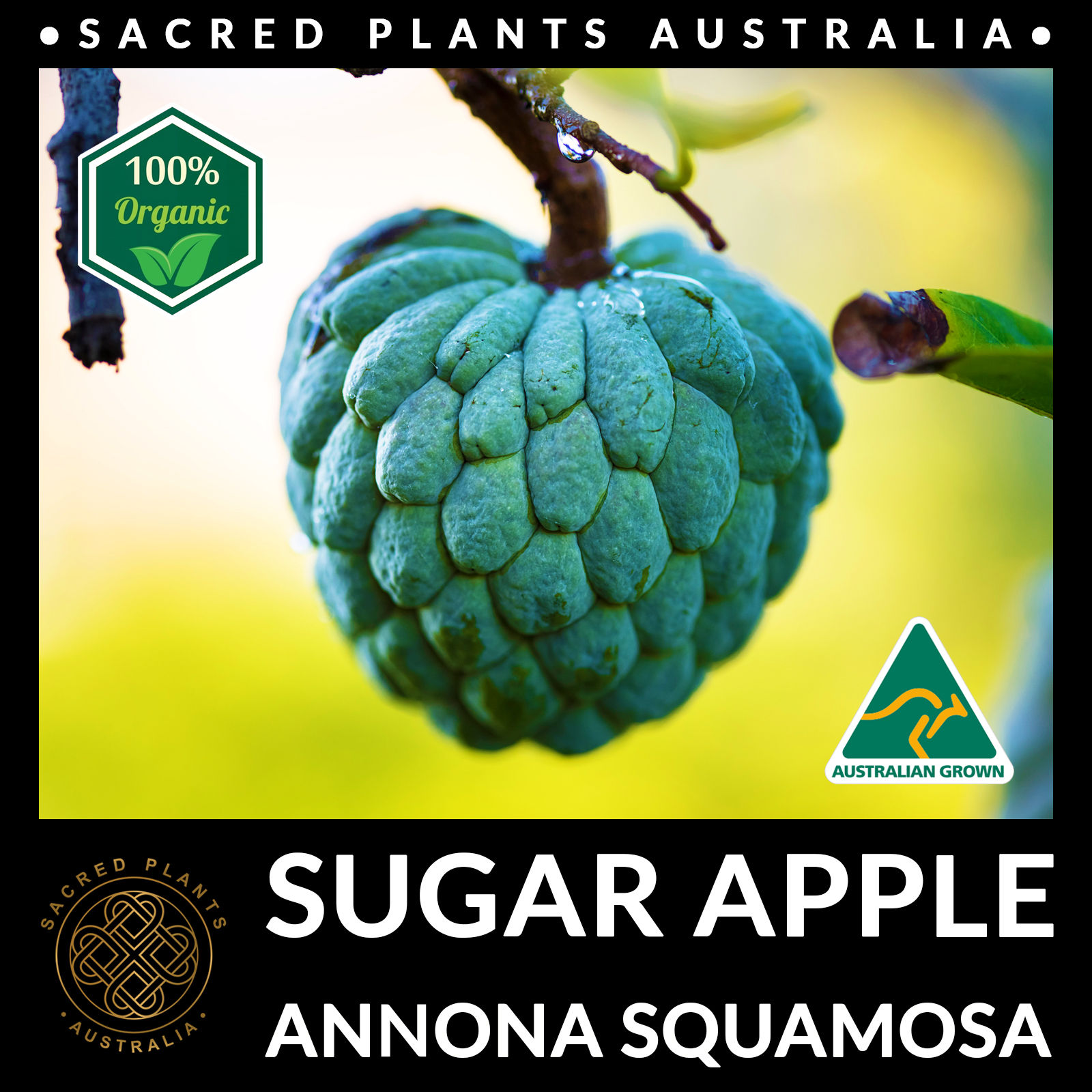

SUGAR APPLE Seeds | Annona squamosa
Welcome to Sacred Plants Australia, where we help you cultivate nature’s treasures.
Sugar Apple (Annona squamosa) is a tropical gem known for its unique, heart-shaped leaves and delectable, sweet fruit. A symbol of abundance, this sacred plant is celebrated for its beauty and flavor. Growing Sugar Apple from seed allows you to bring a piece of the tropics into your garden, nurturing a plant with deep cultural significance.
Why Choose Our Sugar Apple Seeds?
100% Organic & Australian Grown: Our seeds are sustainably grown right here in Australia, ensuring the highest standards of purity and environmental care.
Top-Quality Seeds: Carefully selected for strong germination, our Sugar Apple seeds offer vibrant, healthy plants that produce delicious fruit.
Convenient Pack Sizes: Available in packs of 5 or 15 seeds, perfect for gardeners of all skill levels, whether you’re planting a small batch or expanding your fruit orchard.
Fast & Free Shipping: We ship quickly and at no extra cost, so you can begin growing your Sugar Apple without delay.
Start your journey with Sugar Apple today. Order now and grow your own sacred fruit-bearing tree, bringing the sweetness of the tropics to your home.
Have Questions?
We’re here to help! Reach out for expert planting and care advice.
Thank you for choosing Sacred Plants Australia. By growing these organic, sacred seeds, you nurture not just your garden, but a deeper connection to nature.
Love & Light
Sacred Plants Australia
Nurture Nature. Grow Sacred.
SUGAR APPLE Seeds | Annona squamosa
The Sugar Apple (Annona squamosa) is a plant of deep cultural and spiritual importance, particularly in tropical regions around the world. Revered for its sweet and nourishing fruit, it has played a crucial role in traditional ceremonies and spiritual healing practices for centuries.
In many parts of the world, especially in South America, the term "Sugar Apple" refers to the Annona squamosa tree or shrub. The plant is well-known in these communities, particularly for its spiritual significance and its use in traditional ceremonies.
Plant Spirit
The plant spirit of the Sugar Apple (Annona squamosa) is described as deeply feminine, embodying qualities of nurturing, growth, and abundance. Known for its sweet fruit, the Sugar Apple carries the protective energy often associated with the feminine archetype. It is linked to intuition, emotional healing, and the nurturing aspects of spiritual growth. In ceremonial contexts, the spirit of the Sugar Apple helps guide individuals through deep transformation, offering clarity, wisdom, and healing. Its energy is felt as potent and grounding, assisting those who seek to connect with their inner power and feminine energy.
Cultural Relevance
The Sugar Apple (Annona squamosa) plays a central role in the spiritual and ceremonial practices of many tropical communities. The plant is revered for its use in traditional ceremonies where it is used to amplify the experience and provide spiritual protection. The fruit of the Sugar Apple is considered a bridge to the spirit world, often used to facilitate communication with ancestral spirits or to bring insight during shamanic rituals. Beyond its spiritual significance, the Sugar Apple also serves to maintain the energetic balance of the body, mind, and spirit, helping to clear negative energies and foster healing.
Medicinal Uses
Beyond its spiritual significance, the Sugar Apple (Annona squamosa) has long been used in traditional medicine for its therapeutic properties. Here are some of the medicinal benefits:
-
Psychological Support: The Sugar Apple is known for its ability to promote mental clarity, emotional release, and spiritual insight. It is used in traditional ceremonies to help clear psychological blockages, aid in overcoming trauma, and promote inner healing.
-
Pain Relief: The plant is also valued for its pain-relieving properties. The Sugar Apple has been used to alleviate both physical and emotional discomfort.
-
Anti-inflammatory: Its anti-inflammatory effects help reduce swelling and inflammation in the body, making it useful for conditions such as arthritis and other inflammatory disorders.
With its powerful combination of cultural, spiritual, and medicinal uses, the Sugar Apple continues to be a revered and integral plant in many traditional practices, offering both healing and protection to those who work with its energy.
-
Growing the Sugar Apple (Annona squamosa) can be a highly rewarding experience, as it produces delicious, tropical fruit and thrives in warm climates. To ensure your Sugar Apple grows strong and healthy, it is essential to follow the correct planting steps and provide the right conditions.
Ideal Planting Conditions
Soil: The Sugar Apple prefers fertile, well-draining soil, ideally with a slightly acidic pH between 5.5 and 6.5. A rich, loamy soil with added organic matter will provide the necessary nutrients for strong growth.
Watering: The Sugar Apple requires consistently moist soil, but it does not tolerate waterlogging. Ensure that the soil is kept damp but not saturated. Regular watering is crucial, especially during the dry season, but avoid letting the plant sit in standing water.
Sunlight: The Sugar Apple thrives in full sunlight, ideally receiving at least 6 hours of direct sunlight per day. This plant requires a lot of light to grow vigorously and produce healthy fruit.
Temperature: Sugar Apple grows best in warm, tropical climates with temperatures ranging from 24°C to 30°C. It is highly sensitive to frost and should not be exposed to temperatures below 10°C. If you're growing it in cooler regions, consider using containers that can be brought indoors during colder months.
Step-by-Step Planting Instructions
Select Your Container: If you’re growing your Sugar Apple in a pot, choose a wide, shallow container with excellent drainage. Sugar Apple can also be planted directly into the ground if you live in a warm climate with a long growing season.
Prepare the Soil: Fill your container or garden bed with well-draining, fertile soil. Ensure the soil is rich in organic material like compost or well-rotted manure, which will support healthy plant growth.
Scarify and Plant the Seeds: Sugar Apple seeds have a hard outer coating that benefits from scarification to improve germination. You can scarify the seeds by lightly nicking the hard seed coat with a knife or sandpaper. Soak the seeds in warm water for 24 to 48 hours to soften the coat before planting. After scarifying and soaking, place the seeds gently on the surface of the soil and lightly press them in. Do not bury them, as they require light to germinate. Space the seeds about 2 cm apart to allow for room to grow.
Position the Container: Place your container in a sunny spot where it will receive at least 6 hours of direct sunlight each day. If planting outdoors, ensure that the soil temperature remains within the ideal range and that there’s no risk of frost.
Monitor Growth: Keep the soil consistently moist but not waterlogged. After the seeds germinate, you may need to thin out the seedlings to prevent overcrowding. If growing in containers, ensure the roots have enough room to expand.
Transplanting (if necessary): Once the seedlings are large enough and the weather is consistently warm, transplant them into the garden or larger pots. Space them about 30 cm apart to allow for optimal growth. In tropical or subtropical climates, Sugar Apple can be directly planted in the ground.
By following these steps, you will provide your Sugar Apple (Annona squamosa) with the ideal conditions to thrive, producing strong plants and bountiful, healthy fruit.
Once your Sugar Apple plants are established, proper care is vital to ensure they thrive. Follow these guidelines to support healthy growth and a bountiful harvest.
Watering
Sugar Apple plants prefer consistently moist soil but do not tolerate waterlogged conditions. Ensure the soil remains damp but well-draining, allowing excess water to drain freely. Regular watering is important, particularly during hot or dry weather, but be careful not to overwater, as this can lead to root rot. Always ensure that there is no standing water around the base of the plant.
Fertilising
Sugar Apple benefits from periodic feeding during the growing season. Apply a balanced, organic fertiliser every few months to support healthy growth. Fertilisers with higher phosphorus content promote strong root development and flowering, while those with nitrogen will encourage lush foliage. Avoid over-fertilising, as excessive nutrients may lead to an overabundance of leaves at the expense of fruit production.
Pruning
As your Sugar Apple grows, pruning is necessary to maintain a well-shaped plant and promote air circulation. Remove any dead, yellowing, or damaged leaves to prevent disease. If the plant becomes dense or bushy, consider thinning out some branches to direct energy toward fruit production. Pruning will also help to keep the plant from becoming leggy or top-heavy, ensuring a healthy, balanced structure.
Supporting Growth
Sugar Apple can reach heights of 3 to 6 metres, so providing support for the plant’s growth is crucial. If the plant becomes leggy or top-heavy, consider staking it to prevent it from becoming unstable. This will also help promote stronger, upright growth. Pruning lower branches can further improve air circulation and prevent crowding.
Pest Management
While generally hardy, Sugar Apple may attract pests such as aphids, mealybugs, and caterpillars. Regularly inspect the plant, particularly the underside of the leaves, for signs of pests. If pests are present, treat the plant with organic insecticidal soap or neem oil. You can also introduce natural predators, such as ladybugs, to help keep pest populations under control.
Temperature and Frost Protection
Sugar Apple is sensitive to frost and cold temperatures. If you're growing it in an area with colder weather, it’s important to protect the plant from frost. Consider bringing it indoors during the colder months or using row covers to shield it from the elements. By ensuring your plant is protected from cold temperatures, you’ll help it thrive throughout the year.
Flowering and Seed Production
If you’re growing Sugar Apple for its seeds, allow the plant to flower and produce fruit. The flowers are typically small and fragrant, and once the fruit has matured, you can harvest it for its seeds. Ensure the seeds are properly dried before storing them for future planting. If the plant is healthy and cared for well, it will continue to produce fruit and seeds year after year.
While Sugar Apple (Annona squamosa) is a resilient plant, there are common challenges you might face. Here's a guide to help identify and address these issues so that your plant thrives.
Poor Germination
Possible Causes: Poor germination can result from incorrect planting techniques, old seeds, or failure to scarify the seeds.
Solution: Start by scarifying the seeds. Gently rub them with sandpaper or use a file to nick the seed coat, which helps improve germination rates. Once scarified, surface sow the seeds in well-draining soil. Do not bury the seeds under the soil, as they need light to germinate. Keep the soil moist but not waterlogged, and place the tray in a warm area with indirect light.
Yellowing Leaves
Possible Causes: Yellowing leaves are typically caused by overwatering, nutrient deficiencies, or pest infestations.
Solution: Check the soil to ensure it isn’t waterlogged and improve drainage if needed. Overwatering can lead to root rot, so be cautious with watering. Apply a balanced, organic fertiliser to address nutrient deficiencies and inspect the plant for pests, particularly aphids or mealybugs. If pests are found, treat the plant with organic insecticidal soap or neem oil.
Leggy or Spindly Growth
Possible Causes: Leggy or spindly growth often results from insufficient light, overcrowding, or poor soil conditions.
Solution: Ensure your plant receives at least 6 hours of direct sunlight daily. If growing indoors, move the plant to a brighter location or supplement with artificial grow lights. Make sure there is enough space between plants to prevent overcrowding and use nutrient-rich soil to encourage healthy growth. Thin out overcrowded seedlings to promote stronger, more robust plants.
Stunted Growth
Possible Causes: Stunted growth is usually caused by insufficient watering, poor soil quality, or a lack of essential nutrients.
Solution: Keep the soil moist but not waterlogged. If the soil feels dry or compacted, refresh it with organic matter like compost. Regularly feed your plant with a balanced fertiliser to ensure it gets the necessary nutrients for healthy growth. Inadequate nutrition and poor soil can severely restrict growth.
Pests
Possible Causes: While Sugar Apple is generally pest-resistant, it may attract pests such as aphids, spider mites, or caterpillars.
Solution: Inspect your plant regularly, particularly the underside of leaves, for pests. If pests are detected, spray the affected areas with a mixture of water and organic insecticidal soap or neem oil. Alternatively, introduce natural predators like ladybugs to help manage pest populations.
The Sugar Apple follows a natural growth cycle that requires careful seasonal care to reach its full potential. Here’s a guide to help you manage key milestones throughout the year.
Spring (Planting and Early Growth)
Spring is the time to plant your Sugar Apple seeds and nurture the early stages of growth.
- Plant your seeds in a well-draining soil mix, ensuring they receive plenty of sunlight (about 6 hours daily).
- Keep the soil moist but not waterlogged. Once the seedlings emerge, thin them out to prevent overcrowding and ensure proper airflow.
- If growing indoors, provide supplemental lighting to ensure strong seedling development.
Summer (Vegetative Growth)
Summer is the peak growing period for Sugar Apple, requiring the most attention for steady and healthy growth.
- Fertilising is crucial in this phase. Use a balanced, organic fertiliser to promote healthy foliage and strong growth.
- Water consistently, keeping the soil moist but allowing it to drain properly. Avoid letting the soil dry out completely.
- Regularly inspect for pests or diseases, particularly during the warmer months, and treat any issues immediately.
Autumn (Flowering)
Autumn marks the beginning of the flowering phase for Sugar Apple. It’s essential to provide the right conditions for successful blooming.
- As the plant grows taller and begins to flower, provide support to prevent breakage. Use stakes or structures to keep it upright.
- Reduce fertiliser application as the plant enters the flowering stage and focus on maintaining consistent moisture levels in the soil.
- Watch the weather closely, especially for cold snaps, as the plant is sensitive to frost, which can damage flowering plants.
Winter (Dormancy or Seed Collection)
In winter, Sugar Apple either enters a dormant phase or begins preparing for seed production.
- Harvest seeds carefully when the flower heads begin to dry out. Store the seeds in a cool, dry place until they are ready to be replanted.
- If growing in colder regions, bring the plant indoors or protect it with frost cloths to prevent frost damage.
- For areas with milder winters, the plant can remain outdoors, but ensure it is sheltered from extreme cold to avoid damage.
Choosing the right companion plants for Sugar Apple can help create a balanced and thriving garden environment. Companion planting can benefit Sugar Apple by improving soil health, enhancing pest control, and supporting its growth. Here are some plants that pair well with Sugar Apple.
Sweet Basil (Ocimum basilicum)
Sweet basil is an excellent companion for Sugar Apple, as it helps repel pests like aphids, mosquitoes, and other insects that could potentially harm your tree. The aromatic oils in basil work as a natural repellent, benefiting the Sugar Apple tree while adding to the garden's aesthetics. Both basil and Sugar Apple thrive in similar growing conditions, requiring ample sunlight and well-draining soil.Marigold (Tagetes spp.)
Marigold is a fantastic companion for Sugar Apple due to its ability to deter pests like nematodes, aphids, and whiteflies. The strong scent of marigolds keeps these harmful insects away, making it easier for your Sugar Apple to grow healthily. Additionally, marigolds attract beneficial insects such as ladybugs, which naturally help control pest populations in your garden.Nasturtium (Tropaeolum majus)
Nasturtium serves as a natural pest deterrent, particularly effective against aphids, whiteflies, and other pests that could affect your Sugar Apple tree. Its sprawling growth habit also helps suppress weeds around the base of the tree, reducing competition for nutrients and water. Nasturtium and Sugar Apple share similar sunlight and water requirements, making them an ideal pairing.Comfrey (Symphytum officinale)
Comfrey is a nutrient-dense plant that benefits Sugar Apple by improving soil health. Its deep roots bring up nutrients from the soil that are then released back into the surface when the plant’s leaves are used as mulch. This not only helps nourish the Sugar Apple tree but also improves the overall fertility of the soil. Comfrey also attracts beneficial pollinators, which can help with the tree’s fruit production.Legumes (Peas, Beans, etc.)
Leguminous plants like peas or beans make great companions for Sugar Apple because they are nitrogen-fixers. They add nitrogen to the soil, improving the soil's fertility and supporting healthy growth for Sugar Apple. These plants work well when interplanted with Sugar Apple, as they help maintain a balanced soil ecosystem. Be sure to allow enough space for all plants to grow without overcrowding.Mint (Mentha spp.)
Mint can act as a companion plant for Sugar Apple by deterring pests, particularly ants and aphids, which may otherwise pose a threat to the tree. However, mint tends to spread aggressively, so it’s best to plant it in a contained space, such as a pot or raised bed, to prevent it from overtaking the garden. Both Sugar Apple and mint enjoy full sunlight and moderately moist soil, making them well-suited to each other’s needs.The journey of Sugar Apple (Annona squamosa) from seed to flower is a fascinating process that requires attention to growth stages. Understanding this process will help ensure the plant’s success and allow you to fully appreciate its beauty and benefits.
Germination (Weeks 1-3)
The germination process begins once the Sugar Apple seeds are planted. This stage typically takes about 1 to 3 weeks. During this period, ensure the seeds receive plenty of light and the soil remains consistently moist, but not waterlogged. Sugar Apple seeds require light for optimal germination, so avoid burying them deeply. The first signs of growth will be small shoots emerging from the soil, signalling the start of your plant’s life cycle.
Seedling Stage (Weeks 4-8)
Once the seeds have germinated, the plant will enter the seedling stage. This phase sees rapid growth in warm, sunny conditions. Ensure the seedlings are spaced out adequately to promote strong root development. If growing indoors, make sure they receive adequate light or use supplemental lighting to keep them healthy. The soil should remain moist but well-draining, and a light, balanced fertiliser can be applied to promote healthy growth during this time.
Vegetative Growth (Months 2-5)
As the Sugar Apple enters the vegetative growth stage, the plant will begin growing taller and producing larger leaves. This is when the plant focuses on establishing a strong root system. Regular watering is essential to keep the soil moist, but be cautious not to overwater. The plant may require support if it grows taller than expected. At this stage, the plant is building up the energy it needs to eventually flower.
Flowering (Months 5-7)
In late spring to early summer, the Sugar Apple will enter the flowering stage. Small, greenish-yellow flowers will begin to bloom. These attract pollinators like bees, which are crucial for fertilisation. As the flowers bloom, the plant will start to produce fruit, which is the next stage in its life cycle.
Seed Collection (Late Summer to Autumn)
After the flowers have faded, seed pods will begin to form. These pods will eventually dry out when the seeds are fully mature. Wait until the pods are completely dry before collecting the seeds. Store them in a cool, dry place for future planting or for next season’s growth.
Explore these helpful YouTube tutorials to guide you through each step of growing, caring for, and enjoying Sugar Apple (Annona squamosa):
How to Grow Sugar Apples From Seeds
This tutorial provides an easy-to-follow guide on growing Sugar Apples (Annona squamosa) from seeds. Learn the step-by-step process, including essential tips for seed preparation, soil, and care to ensure successful germination and healthy growth.Key Takeaways: The video demonstrates how to plant Sugar Apple seeds, ensuring you have the right environment for optimal growth.
How to Eat the Fruit Sugar Apple
Discover how to prepare and eat the delicious fruit of the Sugar Apple. This video shows you the best methods to peel, scoop out the flesh, and enjoy the fruit's sweet and creamy taste.Key Takeaways: Provides practical advice on how to properly eat a Sugar Apple, from peeling to enjoying its unique flavour.
Sugar Apple (Annona Squamosa)
This video offers an overview of the Sugar Apple plant, covering its features, uses, and growth requirements. It's an ideal introduction for those interested in learning more about this tropical fruit.Key Takeaways: An informative video detailing the Sugar Apple plant's key characteristics, perfect for beginners looking to grow or learn about the species.
What is a Sugar Apple & Taste of Annona Squamosa
Explore the Sugar Apple in-depth, including its origins, how it grows, and its distinctive taste. This video provides a sensory journey into the world of Annona squamosa.Key Takeaways: Learn about the Sugar Apple's flavour profile and how it stands out among tropical fruits, with helpful insights on its best uses and preparation methods.
These tutorials offer valuable insights into growing, harvesting, and enjoying Sugar Apple. Each video is designed to be informative and practical, providing clear guidance for those interested in this tropical fruit.
Annona squamosa, commonly known as Sugar Apple, is a tropical fruit-bearing plant that holds significance in both cultural and medicinal contexts. Its beautiful, heart-shaped fruits are not only enjoyed for their sweet taste but also revered for their health benefits.
One of the most compelling aspects of Annona squamosa is its use in traditional medicine. The fruit, seeds, and leaves have been used for various purposes in healing practices across many cultures, particularly in South America, Africa, and Asia. It is considered a natural remedy for a variety of ailments, including digestive issues, fever, and skin conditions.
Culturally, Sugar Apple is often associated with spiritual significance. In some regions, it is used in ceremonies to bring about spiritual healing and is believed to connect individuals to the spiritual realm. The plant itself is often seen as embodying nurturing energy, and its feminine spirit is said to offer protection, love, and wisdom to those who seek its guidance.
Beyond its spiritual and medicinal uses, Annona squamosa is highly prized for its nutritious fruit. The fruit is rich in vitamins, minerals, and antioxidants, making it a valuable addition to any diet. It is particularly known for its high levels of vitamin C, which can help strengthen the immune system.
In addition to its benefits for the body, Sugar Apple is admired for its resilience in the face of environmental challenges. It can thrive in subtropical and tropical climates and is relatively easy to grow with the right care. Its fruit is not only an important food source but also a symbol of sustenance and longevity.
How long do Sugar Apple seeds take to germinate?
Germination of Sugar Apple seeds typically takes between 3 to 6 weeks, depending on factors like temperature and moisture. For best results, maintain a soil temperature between 21°C and 27°C.
Can Sugar Apple be grown indoors?
Yes, Sugar Apple can be grown indoors, provided it receives ample sunlight. Position the plant in a sunny location, such as a south-facing windowsill, or use grow lights to ensure it gets at least 6 hours of direct sunlight daily.
What kind of soil does Sugar Apple prefer?
Sugar Apple prefers well-draining, fertile soil with a slightly acidic to neutral pH (around 5.5 to 7.0). A loamy, rich soil mix is ideal as it holds moisture without becoming waterlogged.
Do I need to soak Sugar Apple seeds before planting?
Yes, Sugar Apple seeds benefit from soaking before planting. Soak the seeds for 24-48 hours in warm water to improve germination rates.
Can I grow Sugar Apple outside in a temperate climate?
Sugar Apple thrives in tropical and subtropical climates. In temperate climates, it can be grown outside if started indoors and then transplanted once the risk of frost has passed. Ensure the plant is sheltered from cold temperatures.
How do I protect my Sugar Apple plants from pests?
Sugar Apple is relatively resilient to pests but may attract aphids and other insects. Use organic pest control methods like neem oil or insecticidal soap to protect the plant. Regularly check for pests, especially during the warmer months.
How tall do Sugar Apple plants grow?
Sugar Apple trees can grow up to 4 to 6 meters tall, depending on growing conditions. Pruning can help control the height and shape of the tree, especially when growing in containers.
How do I harvest Sugar Apple fruit?
The fruit is typically ready for harvest when it turns a pale green to yellow and gives slightly when squeezed. Carefully twist the fruit off the tree, taking care not to damage the surrounding branches.
Can I save Sugar Apple seeds for next season?
Yes, you can save seeds from your Sugar Apple fruits. After harvesting, remove the seeds, clean them thoroughly, and store them in a cool, dry place. Ensure they are kept away from moisture and direct sunlight until you're ready to plant.
At Sacred Plants Australia, we are committed to helping our customers grow Sugar Apple responsibly and in full compliance with Australian law. Below is a detailed guide to the legal considerations for cultivating Sugar Apple, including its ornamental use and legal regulations.
Ornamental Use and Legal Regulations
Sugar Apple can be legally cultivated throughout Australia for ornamental purposes. There are no specific restrictions on its cultivation in any state or territory. It is widely accepted for ornamental gardening and traditional use.
Export Considerations
If purchasing Sugar Apple seeds or plants for export or overseas cultivation, check the regulations in the destination country. Import laws vary across nations, and it’s essential to comply with these regulations to avoid any legal complications.
Germination Disclaimer
While we provide detailed instructions and guidance to help you successfully grow your Sugar Apple, results may vary based on individual growing conditions such as climate, water quality, and plant care. Sacred Plants Australia cannot guarantee the outcome of your cultivation efforts due to these environmental factors. By purchasing our products, you acknowledge and accept these variables and agree to follow our guidelines for the best results. We strongly recommend regular monitoring of your plants to ensure their health and well-being.
Disclaimer
This information is intended as general guidance and should not be considered as legal advice. Laws and regulations regarding Sugar Apple cultivation and use may vary and change over time. For specific advice, consult local authorities or a qualified legal professional.
Copyright and Trademark
All content on the Sacred Plants Australia website is protected by copyright law. Any unauthorised reproduction or use of this content is prohibited.
© 2026 Sacred Plants Australia. All rights reserved.